


Embracing AI-Fueled Automation: Transforming Business Processes for Maximum Efficiency
By TSF Team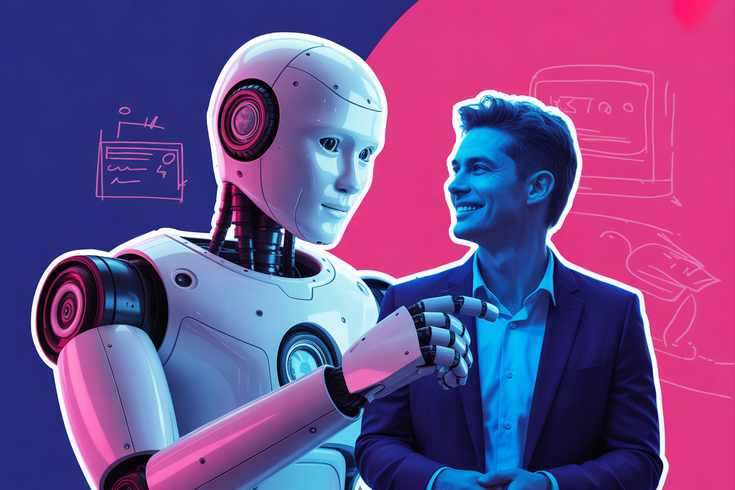
AI-driven automation isn't just the future; it's the present reality of making businesses faster, smarter, and more efficient. By incorporating AI, you destroy wasteful human limitations.
- Start identifying which processes lack efficiency.
- Implement AI solutions tailored to your industry.
- Train your team to work alongside AI as partners, not adversaries.
In the relentless race of business, falling behind isn't an option. Technology doesn't care about your hesitation—it moves. Barriers? Mostly mindset, thinking AI's the enemy instead of an ally. AI for business is about more than automation; it's about evolving. Ditching outdated methods isn't an option—it's a necessity for survival.
How to Use AI to Transform Business Processes
AI integration begins by assessing your current process inefficiencies. You don't need to overhaul everything at once. Start with areas where data shows the most significant bottlenecks, like customer service wait times or supply chain gaps. Include AI technology that fits your specific needs, whether it's chatbots for customer support, machine learning for predictive supply chain management, or data analytics for marketing insights.
- Identify bottlenecks with hard data.
- Choose AI solutions that align with these issues.
- Train staff on using AI tools effectively.
Why You're Failing at AI Automation
Failure isn't a result of trying AI; it's hesitating to act. You stand paralyzed because you're afraid of disapproval or losing control. Everyone wants to innovate until it requires changing behavior. If you avoid AI, you're setting yourself up to watch competitors race by.
Tips for overcoming AI failures include:
- Focus on a single area to improve first.
- Seek partner firms with AI success stories.
- Avoid perfectionism. Start small, scale fast.
What is AI in Business: Definitions That Matter
AI in business exceeds simple automation—it's smart decision-making and strategic foresight. Driven by machine learning and data modeling, AI adapts better and faster than any human analyst could. Remember, machines get stronger as you feed them data; they'll do the heavy lifting, but they need input.
- AI: Algorithms that process massive data for predictive insight.
- Machine Learning: Continually 'learning' systems reacting to new data.
Comparison: Humans vs. AI in Efficiency
What your team does in days, AI does in minutes. Whether it’s delivering personalized customer interactions or detecting supply chain delays, automation achieves it with pinpoint accuracy. While you're deliberating strategy, AI’s executing tactics.
Humans:
- Cost-effective in creativity
- Prone to errors/inconsistencies
AI:
- Cheaper long-term investments
- Consistent, precise output
The 6-Month Guide to Implementing AI
You want results, not theory. Here is how you can integrate AI within six months:
- Define clear, measurable goals.
- Gather and clean all business data.
- Choose pilot areas for immediate AI impact.
- Train your key teams in AI adoption.
- Assess performance and iterate.
- Scale what works, tweak what doesn’t.
You've got two choices: Dive into AI with clear goals or stay stagnant until staying safe economically kills your business. Choose fast. AI is now—inaction isn't an option. If you play it safe, you’re not playing to win.
Final Push: Stop Hesitating, Start Evolving
AI doesn’t wait for your comfort zone. Inaction out of fear or perfectionism keeps you stagnant. Stop aiming for what could work someday and start building what works now. You know the need—act on it. AI's here; will you be one to adapt or be left behind?